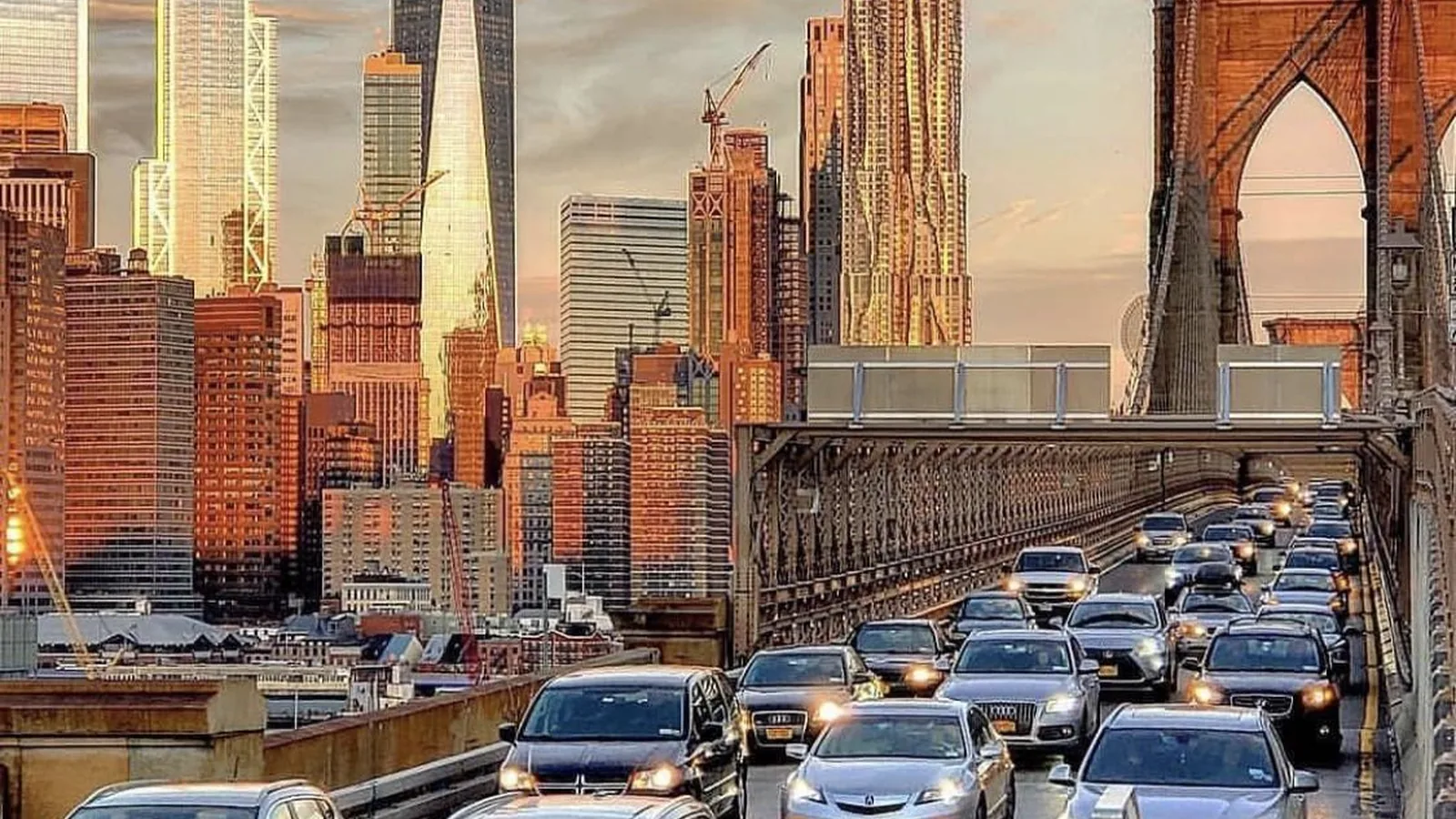
If you drive into Manhattan from New Jersey, you may have to pay New York City’s congestion pricing toll in addition to any bridge or tunnel toll. Under the current MTA Congestion Relief Zone rules, vehicles are tolled when they enter the Congestion Relief Zone (CRZ), which is generally Manhattan south of and including 60th Street. The zone excludes the FDR Drive, West Side Highway/Route 9A, and the Hugh L. Carey Tunnel connections to West Street. The key question for a New Jersey driver is not simply “Did I come from New Jersey?” but whether my route enters local Manhattan streets or avenues in the zone.
The short answer
A typical New Jersey driver does pay the congestion pricing toll when entering Manhattan below or at 60th Street. That includes most trips from New Jersey through the Lincoln Tunnel or Holland Tunnel to destinations in Midtown, Chelsea, the Village, SoHo, Tribeca, the Financial District, or the East Side below 60th Street. The MTA states that vehicles entering Manhattan south of and including 60th Street are charged, and that the West Side Highway/Route 9A is excluded but the street connections from the Lincoln and Holland tunnels to that highway generally involve Manhattan streets and therefore are tolled. Drivers on those routes may receive a crossing credit if they qualify. See the MTA FAQ and the MTA zone toll page.
Where the zone begins
The current CRZ covers local streets and avenues in Manhattan south of and including 60th Street. In plain English, if your car comes off a New Jersey crossing and then uses Manhattan surface streets at or below 60th Street, that is usually a tolled entry.
Important carve-outs matter:
- FDR Drive is excluded.
- West Side Highway/Route 9A is excluded.
- The Hugh L. Carey Tunnel connections to West Street are excluded.
But those exclusions do not mean every approach from a bridge or tunnel is free. The MTA’s official map explains that many connections between crossings and excluded highways still require travel on city streets, and those movements are tolled. The map specifically identifies tolled connections involving the Lincoln Tunnel to West Side Highway and Holland Tunnel to West Side Highway.
Charged hours: peak vs. overnight
The MTA’s current hours are:
- Weekdays: peak tolls apply from 5 a.m. to 9 p.m.
- Weekends: peak tolls apply from 9 a.m. to 9 p.m.
- Outside those windows, the overnight toll applies, which the MTA says is 75% lower than the standard peak-period rate.
For a standard passenger vehicle, the current MTA rate schedule lists:
- E-ZPass: $9 peak, $2.25 overnight
- Tolls by Mail: $13.50 peak, $3.30 overnight
Motorcycles have lower rates, and trucks and buses have different rules and amounts under the same official schedule.
Once per day: when it applies
For most New Jersey drivers in ordinary passenger vehicles, one of the most important rules is the daily cap. The MTA states that passenger vehicles and motorcycles are tolled once daily, based on first entry into the CRZ. The MTA also says tolls are charged when vehicles enter the zone, not for exiting it or simply remaining inside it.
That means:
- If you enter the CRZ in your car in the morning and re-enter later the same day, you generally are not charged a second CRZ toll for that passenger vehicle.
- The amount is based on the first entry that day, including whether that first entry happened during peak or overnight hours.
This once-daily rule is for passenger vehicles and motorcycles. The MTA’s schedule says other vehicles are charged every time they enter.
E-ZPass vs. mailed bills
The MTA strongly encourages E-ZPass because it is cheaper and cleaner administratively. Under the MTA’s current rider information:
- Drivers may use an E-ZPass from any state to pay the CRZ toll.
- If the license plate on the vehicle does not match the plate on the E-ZPass account, the driver may receive a Tolls by Mail bill instead, at a higher rate.
- The MTA says a Tolls by Mail bill is 50% more than the E-ZPass rate for these passenger-vehicle tolls.
So for a New Jersey driver, a New Jersey E-ZPass is fine, but the account and plate information should be current.
Crossing credits for New Jersey entries
Some New Jersey drivers do not pay the full CRZ amount on top of their tunnel toll. The MTA provides a crossing credit for qualifying entries during the peak period through certain tolled facilities.
According to the MTA CRZ toll page, a credit reduces the CRZ toll for vehicles using a valid E-ZPass and entering during the peak period via one of four tolled entries:
- Lincoln Tunnel
- Holland Tunnel
- Queens-Midtown Tunnel
- Hugh L. Carey Tunnel
For passenger vehicles, the credit is up to $3. The MTA’s schedule also states that to receive the credit, the vehicle must have a valid E-ZPass linked to the correct license plate.
Two limitations matter:
- The credit applies to peak-period entries, not overnight entries, under the current MTA toll structure shown in the official materials.
- It depends on a valid E-ZPass. A mailed bill does not provide the same benefit.
For practical purposes, a New Jersey driver entering Manhattan through the Lincoln or Holland Tunnel during peak hours with a properly set up E-ZPass will typically still owe the CRZ toll, but may get that up to $3 reduction.
Excluded roadways: when New Jersey drivers are not charged
A New Jersey driver is not charged just for using an excluded roadway. The MTA FAQ says that traveling within the zone along or across excluded roadways like West Street or the FDR Drive does not itself incur a toll.
That said, the route must be possible exclusively on excluded highways. For New Jersey trips, this is where many drivers get tripped up. The MTA specifically says that vehicles traveling between the West Side Highway and New Jersey are charged if the trip cannot be made exclusively on highways. The agency adds that the connections between the West Side Highway and both the Lincoln Tunnel and Holland Tunnel involve Manhattan streets, so those drivers are charged a toll, though eligible vehicles may receive a crossing credit.
So, in practice:
- Just driving on the West Side Highway is not a CRZ toll event.
- But coming from the Lincoln or Holland Tunnel onto Manhattan streets to reach that highway is generally tolled.
Taxis and for-hire vehicles are different
If you are a passenger coming from New Jersey in a taxi or rideshare, the pricing structure is not the same as for a privately owned car.
The MTA’s current taxi/FHV toll structure, reflected in TLC’s December 2024 notice, uses a per-trip passenger charge instead of the ordinary daily CRZ entry toll for qualifying TLC trips:
- $0.75 per trip for taxis, street-hail liveries, and trips dispatched by other FHV bases
- $1.50 per trip for high-volume for-hire vehicles such as Uber and Lyft
TLC states those charges apply for trips to, from, within, or through the Congestion Relief Zone, and that taxis and FHVs are not charged under this per-trip system unless the vehicle is on a trip. The NYC TLC taxi fare page also states that yellow and green taxis add an MTA Congestion Pricing toll of 75 cents for the area south of and including 60th Street, with the same roadway exclusions.
Do not confuse this with the older New York State congestion surcharge for trips south of 96th Street. TLC explains that surcharge is separate from the MTA Congestion Pricing toll.
Exemptions and discounts
The MTA provides several current exemption and discount pathways, but they are limited and should not be assumed.
Disability-related exemption
The Individual Disability Exemption Plan exempts qualifying vehicles from the CRZ toll when transporting a person with a disability, including when the vehicle is operated by a caregiver. The MTA application materials list qualifying credentials such as a valid NYC Parking Permit for People with Disabilities issued or renewed by the stated date, or an Access-A-Ride ID.
Low-Income Discount Plan
The Low-Income Discount Plan is available for eligible registered vehicle owners meeting MTA income or public-assistance criteria. Under the current MTA instructions, eligible passenger vehicles get a 50% discount on the CRZ peak toll after ten trips in the same calendar month. The overnight toll is already discounted, so the extra low-income discount does not apply overnight.
Other exempt categories
The MTA’s current toll page says exemption plans are available for:
- individuals with disabilities or organizations transporting people with disabilities
- emergency vehicles
- buses
- specialized government-owned vehicles
Always confirm the exact eligibility rules with the MTA before relying on an exemption.
Practical New Jersey route examples
Here is how the current rules usually work for common New Jersey trips.
1) Lincoln Tunnel to Midtown office on West 45th Street
Charged. You are entering Manhattan local streets inside the CRZ. If you enter during peak hours with valid E-ZPass, you may qualify for an up to $3 crossing credit.
2) Holland Tunnel to Tribeca parking garage
Charged. Tribeca is inside the CRZ, and the connection from the Holland Tunnel involves Manhattan streets. Peak-period E-ZPass users may qualify for the crossing credit under the MTA rules.
3) George Washington Bridge to Upper Manhattan above 60th Street
Usually not charged, as long as you do not enter the CRZ at or below 60th Street. The CRZ applies only to entry into the Manhattan area south of and including 60th Street.
4) New Jersey to the West Side Highway, staying only on excluded roadway
Potentially not charged, but only if the movement can truly be made without entering local CRZ streets. The MTA warns that the Lincoln and Holland tunnel connections to the West Side Highway generally involve Manhattan streets and therefore are tolled. In other words, this “free pass” is narrower than many drivers assume.
5) Drive in through the Lincoln Tunnel in the morning, leave for New Jersey, then return to SoHo that evening in the same passenger car
Generally one CRZ toll for the day, because passenger vehicles are tolled once daily based on first entry. You still pay separate Port Authority crossing tolls when entering New York at the tunnel.
Don’t forget the tunnel or bridge toll
Congestion pricing is separate from the underlying Hudson crossing toll. The Port Authority’s current toll schedule states that its tolls at the Lincoln Tunnel, Holland Tunnel, and George Washington Bridge are collected entering New York, with no toll collected entering New Jersey. For many New Jersey drivers, that means a trip into Manhattan can involve:
- a Port Authority bridge or tunnel toll, and
- a CRZ congestion toll if the route enters the zone.
Bottom line
Yes, many New Jersey drivers do have to pay New York City congestion pricing under the current rules. You are generally charged when your vehicle enters Manhattan local streets at or below 60th Street. Most trips from New Jersey through the Lincoln Tunnel or Holland Tunnel to destinations in Lower or Midtown Manhattan will be charged. A valid E-ZPass usually lowers the toll and may unlock a peak-period crossing credit of up to $3 for passenger vehicles. Passenger cars and motorcycles are usually charged once per day, while taxis and rideshares follow a different per-trip system.
If you are planning a specific route from New Jersey, the safest rule is simple: if your trip touches ordinary Manhattan streets south of or including 60th Street, assume the CRZ toll applies unless you can confirm your entire movement stays on an officially excluded roadway or you qualify for an MTA exemption.
Sources
- MTA: About the Congestion Relief Zone toll
- MTA: Congestion Relief Zone FAQ
- MTA: Congestion pricing guide and toll schedule PDF
- MTA: Official CRZ entry/exit and excluded-roadway map
- NYC TLC: Taxi fare page
- NYC TLC: Industry Notice #24-10 on MTA congestion pricing toll
- NYC311: Taxi and For-Hire Vehicle Congestion Surcharge
- Port Authority of New York and New Jersey: Toll schedule
- MTA: Individual Disability Exemption Plan
- MTA: Low-Income Discount Plan